
There has been a noticeable change in the types of fences homeowners choose for exposed gardens, and it has happened quietly rather than overnight. I see it regularly across York and surrounding areas. People search for fencing companies near me not because they dislike timber, but because they have learned through experience that certain gardens punish traditional fencing year after year. Many begin by reading advice on York Fencing before asking practical questions about materials that can cope better with wind, wet ground, and constant movement.
From decades working as a fencing contractor, I can say this shift is not driven by fashion. It is driven by performance. Exposed gardens behave differently. They catch more wind. They dry unevenly. They stay wet longer in winter. Timber fencing still has a place, but in exposed locations, homeowners are increasingly choosing alternatives that last longer and require fewer repairs.
What makes a garden exposed in practical terms
Exposure is not just about open countryside. I see exposed gardens in suburban York, new housing estates, and edge of village plots. Exposure comes from wind direction, lack of shelter, elevation, and surrounding layout.
Gardens backing onto fields, rivers, or open green space take the full force of prevailing winds. Corner plots suffer crosswinds. Long, straight fence runs catch gusts like sails. Even small gardens can be exposed if nearby buildings funnel wind toward the boundary.
Homeowners often do not realise their garden is exposed until their fence starts to struggle. They search for fencing near me after panels rattle through winter or posts lean after storms. By then, the damage is usually already underway.
Why timber fencing struggles most in windy locations
Timber fencing reacts to wind in two ways. It absorbs moisture and it flexes under pressure. In exposed gardens, both become problems.
Moisture adds weight to panels. Wind increases pressure on rails and posts. Over time, fixings loosen and rails crack at stress points. Lightweight panels suffer first. Waney lap fencing twists and bows. Closeboard lasts longer, but even it struggles when posts begin to move.
I often inspect fences where the timber itself still looks sound, but the structure has shifted. Posts rock in softened ground. Rails pull away slightly. Panels begin to rattle. These are classic signs of wind stress rather than poor timber quality.
How clay soil worsens exposure related problems
York’s clay soil makes exposed gardens even more challenging. Clay holds water, which weakens post foundations during winter. When wind pressure pushes against the fence, posts in soft clay move more easily.
I usually install posts at 600mm to 750mm depth, sometimes deeper in exposed areas. Older fences often sit shallower. When wet ground meets strong wind, shallow posts cannot cope. They lean gradually rather than snapping, which makes the problem harder to spot early.
Homeowners searching for fencing contractors near me often say their fence feels loose even though it has not fallen. That feeling usually comes from post movement underground.
Why repeated repairs signal the need for change
Many exposed garden fences go through cycles of repair. One panel replaced after a storm. A rail fixed the following year. A post strengthened with extra concrete. Each repair keeps the fence standing a little longer.
Over time, these fixes add up. The fence becomes a patchwork of old and new materials. Appearance suffers. Structural integrity weakens. This is when homeowners begin to question whether timber is still the right choice.
I often have honest conversations with clients who search for fence repair near me. If the fence has required repeated attention, it may be time to rethink the material rather than continue patching.
The growing appeal of concrete posts in exposed gardens
Concrete posts have become a common upgrade in exposed locations. They do not rot. They remain rigid even when soil conditions change. They resist wind pressure far better than timber posts.
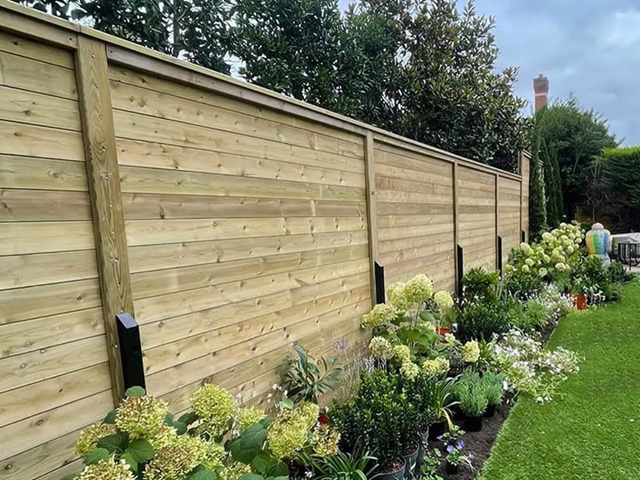
Many homeowners still prefer the look of timber panels, so a mixed approach works well. Concrete posts with timber panels provide strength without losing warmth. This combination reduces the risk of post failure and extends the lifespan of the fence.
In exposed gardens, this approach often makes the difference between yearly repairs and long term stability.
Why composite fencing suits windy locations
Composite fencing has gained popularity in exposed gardens for one main reason. It stays stable. Composite boards do not absorb moisture, so they do not become heavier in winter. They remain straight through temperature changes.
Composite fencing cost is higher upfront, but homeowners in exposed locations often see it as an investment. After dealing with repeated timber failures, they want a solution that removes uncertainty.
Composite does require proper installation. Frames must be level. Posts must be secure. But once installed correctly, composite fencing copes well with wind and wet conditions.
How slatted designs reduce wind pressure
Design plays a big role in how fences behave in exposed gardens. Solid panels catch wind like a sail. Slatted and hit and miss designs allow air to pass through, reducing pressure on the structure.
I often recommend these designs for windy gardens. They maintain privacy while allowing airflow. The reduced pressure means less stress on posts and rails, which extends the life of the fence.
Homeowners searching for fencing contractor near me are increasingly open to these designs once they understand the practical benefits.
Why post depth matters more in exposed locations
Post depth becomes critical when wind pressure increases. Deeper posts anchor the fence into more stable ground. In exposed gardens, I often go beyond standard depths to ensure stability.
Shallow posts may hold up in sheltered gardens, but they struggle when wind pushes repeatedly against the fence line. Over time, even slight movement weakens the structure.
Homeowners who replace fences early in exposed gardens usually do so because they recognise this pattern. They choose deeper installations to avoid repeating the problem.
How fixings influence long term performance
Fixings take a lot of strain in exposed gardens. Nails pull through timber. Screws loosen. Brackets bend. These issues rarely appear all at once. They develop slowly.
I use fixings designed for outdoor exposure and high load. Cheaper fixings may save money initially, but they often lead to early failures. Homeowners who experience repeated issues learn to value this detail.
This is one of the reasons people move away from basic timber fencing in exposed areas. The system as a whole needs to be stronger.
The role of maintenance in exposed gardens
Maintenance demands increase in exposed locations. Timber fences need regular treatment. Fixings need checking. Panels may need adjustment after storms.
Many homeowners decide they no longer want this level of upkeep. They prefer materials that stay stable with minimal intervention. Composite panels, concrete posts, and reinforced designs support that preference.
Lifestyle changes also influence this shift. People want their fences to look good without constant attention.
How storm patterns influence material choices
Storms have become more frequent and unpredictable. Exposed gardens feel this first. Panels that survived years of mild weather now struggle during stronger gusts.
I often hear homeowners say their fence was fine until the last storm. In reality, the fence had been weakening over time. Storms simply reveal the damage.
This experience pushes people toward materials that cope better with sudden stress.
Why early replacement makes sense in exposed gardens
Waiting for full failure in exposed gardens often leads to emergency work. Panels fall. Posts snap. Gardens become unsafe or exposed.
Replacing fences early allows homeowners to plan properly. They choose materials suited to exposure. They schedule work during calmer seasons. They avoid rushed decisions.
Many people searching for fencing services now do so before winter, not after storms.
How design choices have evolved quietly over time
This shift away from timber has not been loud or dramatic. It has happened gradually as homeowners learn from experience. Each repair, each storm, each leaning post reinforces the lesson.
Fencing choices now reflect how gardens actually behave rather than how they look on installation day. Strength, airflow, and stability matter more.
Choosing fencing solutions that suit exposed gardens
For homeowners comparing options, the garden fencing information helps clarify which materials and designs perform best in different conditions.
Those dealing with recurring issues often find it helpful to understand whether repairs are still viable through the fence repairs guidance.
Why exposed gardens demand different thinking
Exposed gardens place constant demands on fencing. Wind, moisture, and soil movement combine to test every weak point. Traditional timber fencing can still work, but only when installed and maintained carefully.
From decades working in these conditions, it is clear why homeowners are quietly shifting away from standard timber solutions. They want fences that cope with exposure rather than fight it. Stronger posts, smarter designs, and more stable materials create boundaries that stand firm through changing seasons and reduce the cycle of repair and replacement.


